AI and cognition
Researchers interested in links between artificial intelligence and cognition, including computational modeling and AI-based approaches to language, perception, memory, and social skills.
Workshop in Grenoble | October 14-15, 2026
A two-half-day workshop connecting AI, NLP, speech and multimodal processing, robotics, cognitive science, and developmental science.
We are pleased to announce a workshop on Developmental AI for language and cognition in Grenoble, France, co-organized within the framework of the DevAI&Speech Chair of the MIAI Cluster IA and the NLP&Cognition group of the CNRS GDR TAL, in connection with the GDR BabyLab national French meeting.
The initiative is designed to foster interactions between communities studying artificial intelligence, cognition, language, and early cognitive development.
The Developmental AI workshop will be followed in Grenoble by the GDR BabyLab national meeting, making it possible for participants from both communities to attend both events.
Joint initiative
Participants from both communities are welcome to attend both events. The Developmental AI workshop will be directly followed by the national meeting of the GDR BabyLab, also taking place in Grenoble.
Researchers interested in links between artificial intelligence and cognition, including computational modeling and AI-based approaches to language, perception, memory, and social skills.
Researchers studying early cognitive development with infants and young children using experimental methods in laboratory and ecological settings.
Scientific scope
The workshop brings together interdisciplinary research across the following areas.
Keynote speaker
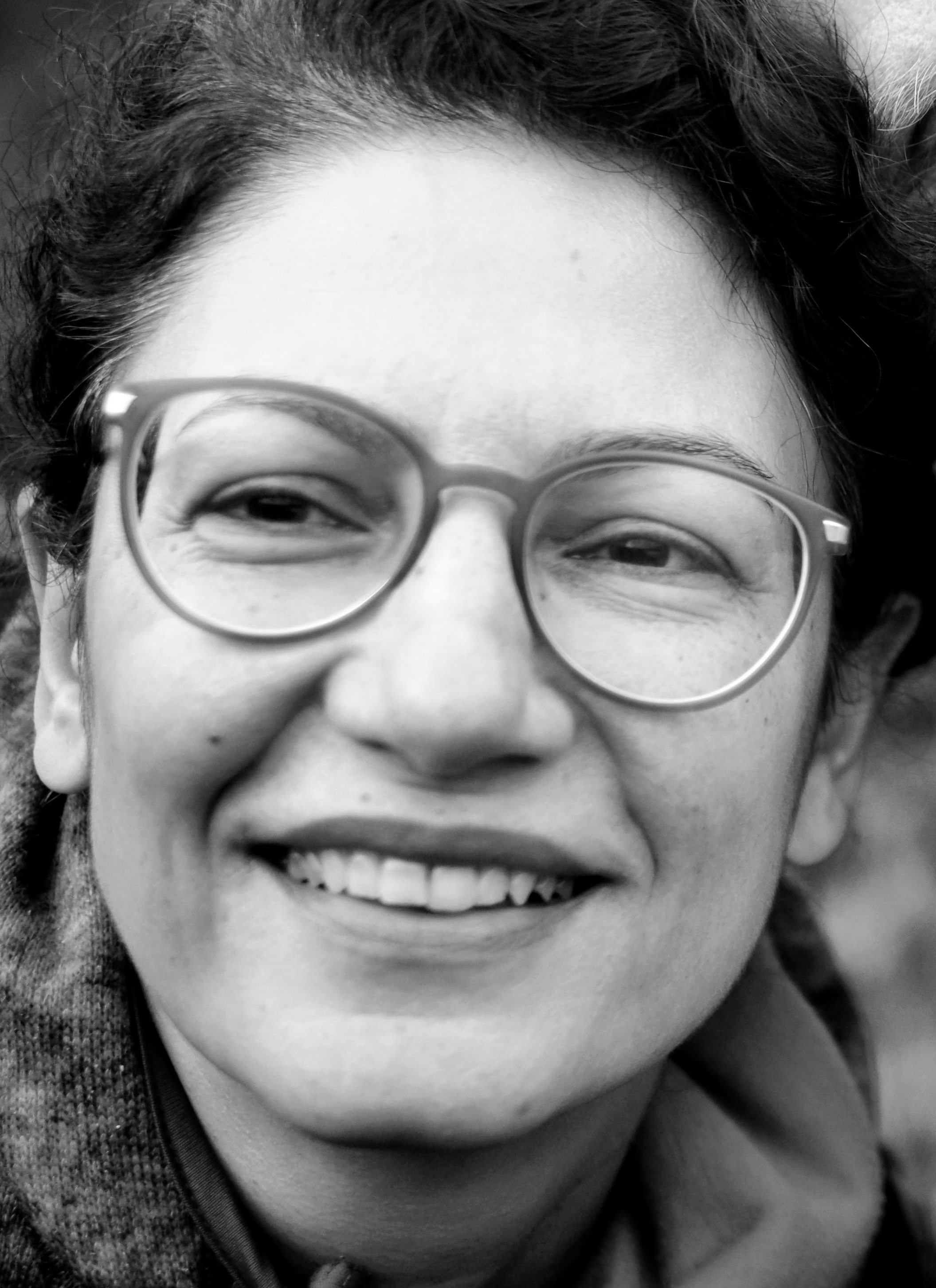
Keynote speaker
Tilburg University
Are computational cognitive models of human language still relevant?
Computational modeling of human cognition has a long history, and as a methodology offers many advantages over traditional empirical methods. Computational models of human language acquisition and processing in particular have been used extensively to simulate the emergence of abstract linguistic knowledge from child-directed input, and to test language learnability hypotheses as well as to explain developmental patterns observed in empirical data.
The rapid rise of deep learning architectures and especially LLMs has been seen as a breakthrough in terms of simulating human-like linguistic behaviour. Many studies now treat LLMs as a proxy for the human brain, and compare their hidden activations with those measured in empirical or neuroscientific studies of human subjects. However, these models are typically developed without conforming to cognitive plausibility constraints such as the quantity and quality of their training data as well as their memory and processing limitations. This disconnect questions the employment of LLMs as valid tools for studying human language and processing from a cognitive perspective.
In this talk, I will review the fundamentals of developing and using cognitive computational models for studying human language, discuss a few alternative approaches to adapting the state-of-art language technology for studying human language, and suggest directions for developing ecologically valid and cognitively informed computational models.
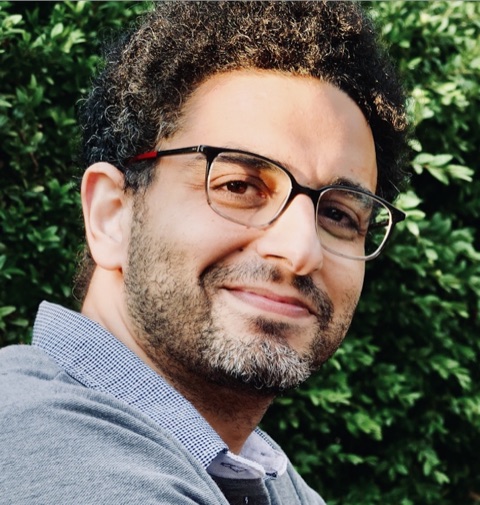
Afra Alishahi is a Professor of Computational Linguistics at the Department of Computational Cognitive Science, Tilburg University. Her research interests revolve around building and using computational models of human language acquisition. In recent years, her research has focused on grounded language learning from audio-visual signals, learning through interaction, and analyzing and interpreting emerging linguistic knowledge in deep neural networks.
Program
Please consult the program below for the latest schedule and presentation details.
Open in Google DrivePractical information
Both venues are located on the university campus and can be reached by tram lines B or C. Get off at the Gabriel Fauré stop.
Wednesday, October 14 · Afternoon
161 rue des Mathématiques
38400 Saint-Martin-d'Hères
By tram: lines B or C, Gabriel Fauré stop
Open in Google MapsThursday, October 15 · Morning
University campus, Saint-Martin-d'Hères
By tram: lines B or C, Gabriel Fauré stop
Open in Google MapsRegistration
The registration deadline has passed and we are no longer accepting new registrations for the workshop.
Participation is free of charge, but registration was mandatory.
Contact

Institutional partners